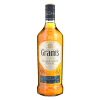
Whiskey
Alcoholic (~Typically 40–50% ABV) Spirits
Whiskey is a broad category of distilled spirits made from fermented grains such as barley, corn, rye, or wheat and typically aged in wooden casks. Produced worldwide, it encompasses a wide range of styles defined by grain selection, distillation methods, maturation practices, and regional traditions.

Flavor & Technical
This section summarizes the sensory balance and technical behavior of Whiskey when used in cocktails, combining perceived flavor intensity with functional roles.
Flavor balance and intensity
Technical characteristics
How Whiskey works in cocktails
Whiskey is analyzed here as a working cocktail ingredient: how it changes flavor, what role it plays in a build, when it should be substituted, and which recipe patterns it supports.
Flavor role in cocktail balance
Whiskey exhibits a wide spectrum of flavors depending on style and origin. Common characteristics include oak-derived notes of vanilla , caramel, and spice, supported by grain-driven sweetness or dryness. Some styles present smooth and rounded profiles, while others are bold, spicy, or smoky. Structure is driven by grain character, fermentation, and wood influence rather than residual sugar .
Best uses behind the bar
Whiskey serves as a base spirit in a wide range of mixed drinks, from spirit-forward stirred cocktails to sours and long drinks. It is also commonly enjoyed neat, over ice , or with a small addition of water to open up aromatics. In culinary applications, whiskey adds depth and richness to sauces, glazes, and desserts.
Substitutes in cocktail builds
Substitutes depend on the specific role and style of whiskey required. Bourbon and rye can replace general structure and oak influence but will differ in sweetness and spice profile. For malt-driven roles, a light malt whisky may substitute more closely. Non-alcoholic substitutes typically rely on whiskey-style syrups or extracts, though they cannot replicate alcohol-driven body or complexity.
Production and style context
Whiskey's origins trace back to the late medieval period in Scotland and Ireland, where early distillation was practiced for medicinal and domestic use. Over time, whiskey evolved into a globally produced spirit with diverse regional styles shaped by local grains, regulations, and aging traditions.
Mixology notes
The spelling of whiskey varies by region, with "whisky" commonly used in Scotland, Canada, and Japan, and "whiskey" used in Ireland and the United States. The term derives from the Gaelic phrase "uisce beatha," meaning " water of life."
Explore cocktails with Whiskey
Use these child hubs to compare Whiskey across repeated cocktail patterns instead of reading recipes one by one. Each link groups recipes by a different structural signal.
By preparation method
Preparation method shows how Whiskey behaves under technique: shaken for integration, stirred for clarity, built for direct length, heated for warmth, or blended for texture.


Cocktails using Whiskey
A curated selection of cocktails that showcase Whiskey as a defining ingredient.




H.D.

Ingredients for H.D. — 4 total (3 shown, 1 more hidden).
+1