Tennessee Whiskey
Alcoholic (~Typically 40–50% ABV) Spirits
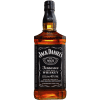
Tennessee whiskey is an American whiskey produced in the state of Tennessee and distinguished by the Lincoln County Process, a charcoal mellowing step in which the new spirit is filtered through sugar maple charcoal before aging. Built on a bourbon-style mash bill, it emphasizes smoothness and approachability alongside oak-driven richness.
Flavor & Technical
This section summarizes the sensory balance and technical behavior of Tennessee Whiskey when used in cocktails, combining perceived flavor intensity with functional roles.
Flavor balance and intensity
Technical characteristics
How Tennessee Whiskey works in cocktails
Tennessee Whiskey is analyzed here as a working cocktail ingredient: how it changes flavor, what role it plays in a build, when it should be substituted, and which recipe patterns it supports.
Flavor role in cocktail balance
Tennessee whiskey presents a smooth, rounded profile with notes of caramel, vanilla , toasted oak, and gentle spice. The charcoal mellowing process softens grain sharpness and reduces harsh edges, resulting in a cleaner, more polished palate compared to many bourbons. Sweetness remains moderate and balanced, with a soft, approachable finish.
Best uses behind the bar
Tennessee whiskey serves as a base spirit in classic shaken and stirred cocktails where smoothness and balance are prioritized. Its mellow character performs well in sours, spirit-forward serves, and long drinks without overpowering citrus or sweet components. It is also employed in culinary applications such as sauces and marinades.
Substitutes in cocktail builds
Bourbon is the closest substitute for Tennessee whiskey, offering similar oak, caramel, and vanilla notes, though it typically lacks the charcoal-mellowed softness. Other American whiskeys can replace structure and body but may introduce sharper grain or spice characteristics.
Production and style context
Tennessee whiskey emerged in the 19th century as distillers in Tennessee adopted charcoal filtration to refine their spirits. This technique became formalized as a defining production requirement, helping establish Tennessee whiskey as a distinct American whiskey style alongside bourbon and rye.
Mixology notes
To be labeled as Tennessee whiskey, the spirit must be produced in Tennessee and filtered through sugar maple charcoal prior to aging, a step known as the Lincoln County Process. This charcoal mellowing is a key factor in the category's reputation for smoothness.
Cocktail using Tennessee Whiskey
The only cocktail in our collection that features Tennessee Whiskey as a key ingredient.