Demerara Sugar
Non-Alcoholic (~0% ABV) Salts & Sugars (Rimming/Specialty)
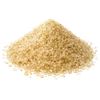
Demerara sugar is a minimally refined cane sugar characterized by large, golden-brown crystals and natural molasses content. In mixology, it is valued for delivering structured sweetness with subtle caramel and toffee notes, often used in syrups or directly in spirit-forward drinks.
Flavor & Technical
This section summarizes the sensory balance and technical behavior of Demerara Sugar when used in cocktails, combining perceived flavor intensity with functional roles.
Flavor balance and intensity
Technical characteristics
How Demerara Sugar works in cocktails
Demerara Sugar is analyzed here as a working cocktail ingredient: how it changes flavor, what role it plays in a build, when it should be substituted, and which recipe patterns it supports.
Flavor role in cocktail balance
Demerara sugar provides high sweetness with added depth from residual molasses, contributing light caramel and toffee notes rather than pure neutral sweetness. Acidity and bitterness are negligible, while its flavor impact is warmer and rounder compared to refined white sugar . When dissolved, it adds body and fuller mouthfeel to drinks.
Best uses behind the bar
Used as a sweetness driver in cocktails where a richer sugar profile is desired. Commonly applied by dissolving into syrups or by direct muddling to sweeten spirit-forward drinks. Compared to white sugar, it enhances perceived depth and warmth without introducing additional aromas beyond light molasses notes.
Substitutes in cocktail builds
Brown sugar can substitute for similar sweetness and molasses character, though it often dissolves faster and can taste heavier. Muscovado sugar provides deeper molasses intensity but can dominate balance. A blend of white sugar with a small amount of molasses can approximate Demerara's profile while maintaining cleaner sweetness.
Production and style context
Demerara sugar takes its name from the Demerara region and river in present-day Guyana, an area historically associated with sugarcane cultivation during the colonial era. The style became known for its coarse crystals and partial refinement, distinguishing it from fully refined white sugar .
Mixology notes
Despite being marketed as a raw sugar , Demerara sugar is typically partially refined, with its characteristic color and flavor coming from retained molasses rather than true raw processing. Crystal size can affect dissolution speed, which is why it is often converted into syrup for consistent use in cocktails.
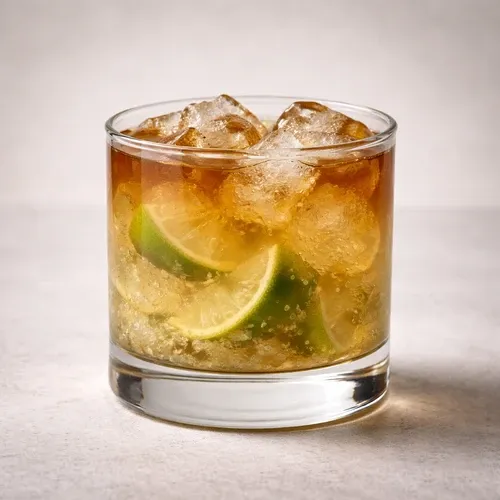
Cocktail using Demerara Sugar
The only cocktail in our collection that features Demerara Sugar as a key ingredient.