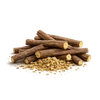
Licorice Root
Non-Alcoholic (~0% ABV as a dry root.) Fresh Herbs & Botanicals
Licorice root is a sweet-tasting botanical root used in cocktails, bitters, and infusions for anise-like depth, earthy sweetness, and lingering herbal body.
Flavor & Technical
This section summarizes the sensory balance and technical behavior of Licorice Root when used in cocktails, combining perceived flavor intensity with functional roles.
Flavor balance and intensity
Technical characteristics
How Licorice Root works in cocktails
Licorice Root is analyzed here as a working cocktail ingredient: how it changes flavor, what role it plays in a build, when it should be substituted, and which recipe patterns it supports.
Flavor role in cocktail balance
Licorice root is naturally sweet-tasting, earthy, woody, and anise-like, with a lingering mouth-coating finish. It is less sharp than anise seed and more rooty than fennel. In cocktails it can round bitterness, support herbal liqueurs, and add perceived sweetness without the clean profile of sugar .
Best uses behind the bar
Used in bitters , botanical tinctures, herbal syrups, amaro-style recipes, root-beer-like flavor systems, anise-led cocktails, and experimental non-alcoholic drinks.
Substitutes in cocktail builds
Anise gives more seed-spice licorice. Fennel seed is greener and softer. Star anise is stronger and more spiced. Sambuca or Pernod add alcohol and sugar with related aroma.
Production and style context
Licorice Root has a long history of medicinal and culinary use, dating back to ancient times in Egypt, China, and Greece. It was believed to have various health benefits and was used in traditional medicine.
Mixology notes
Licorice Root is not related to the flavor of traditional black licorice candy , but rather offers a natural sweetness and herbal complexity to beverages. It is also known for its potential health benefits, including soothing properties for the digestive system.
Similar ingredients (by flavor & function)
Ingredients listed here share similar flavor characteristics or functional roles with Licorice Root, making them comparable in certain cocktail contexts.
Comparable in recipe usage, but structured flavor data is incomplete for this ingredient.
Cocktail using Licorice Root
The only cocktail in our collection that features Licorice Root as a key ingredient.