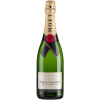
Champagne
Alcoholic (~Typically around 12% ABV.) Wines & Fortified Wines
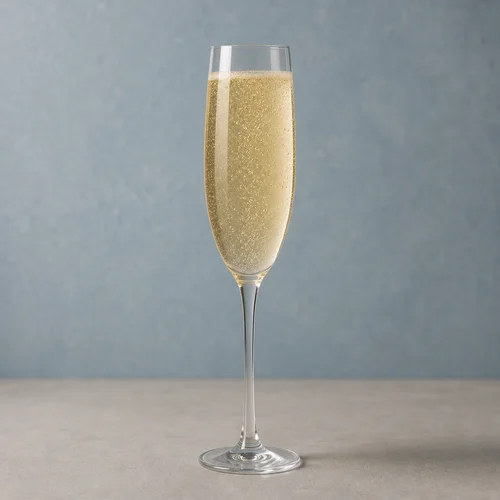
Champagne is a sparkling wine produced in the Champagne region of France, known for its fine effervescence, high acidity, and elegant, dry profile.

Flavor & Technical
This section summarizes the sensory balance and technical behavior of Champagne when used in cocktails, combining perceived flavor intensity with functional roles.
Flavor balance and intensity
Technical characteristics
How Champagne works in cocktails
Champagne is analyzed here as a working cocktail ingredient: how it changes flavor, what role it plays in a build, when it should be substituted, and which recipe patterns it supports.
Flavor role in cocktail balance
Champagne delivers high acidity and fine, persistent effervescence with notes of citrus, green apple , and toasted bread. Sweetness varies by style but remains generally restrained, contributing brightness and lift rather than overt sugar .
Best uses behind the bar
Champagne functions in cocktails as a sparkling wine component that adds effervescence, acidity, and elegance. It provides lift and structural balance and is typically incorporated at the final stage of preparation.
Substitutes in cocktail builds
Other sparkling wines such as Prosecco or Cava can substitute Champagne functionally, though they differ in acidity, sweetness, and bubble structure. Non-alcoholic sparkling beverages replace effervescence but significantly alter overall balance and flavor.
Production and style context
Champagne originated in the Champagne region of France, where advances in bottle fermentation during the seventeenth century led to the development of sparkling wine. It subsequently became an international benchmark for quality and celebration.
Mixology notes
A bottle of Champagne typically contains pressure of around 90 psi, comparable to a car tire. Its fine bubbles result from prolonged bottle fermentation and extended aging on the lees.
Explore cocktails with Champagne
Use these child hubs to compare Champagne across repeated cocktail patterns instead of reading recipes one by one. Each link groups recipes by a different structural signal.
By preparation method
Preparation method shows how Champagne behaves under technique: shaken for integration, stirred for clarity, built for direct length, heated for warmth, or blended for texture.


By glass
Glassware reveals serving format and dilution strategy for Champagne, separating short, spirit-led serves from tall, warm, frozen, or lengthened drinks.


Cocktails using Champagne
A curated selection of cocktails that showcase Champagne as a defining ingredient.
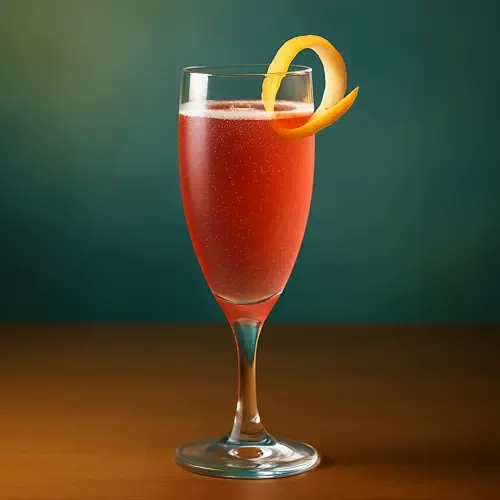
Absolutely Fabulous
Ingredients for Absolutely Fabulous — 4 total (3 shown, 1 more hidden).
+1

Airmail
Ingredients for Airmail — 4 total (3 shown, 1 more hidden).
+1
Apricot punch

Ingredients for Apricot punch — 6 total (3 shown, 3 more hidden).
+3