Caramel Coloring
Non-Alcoholic (~0% ABV) Miscellaneous
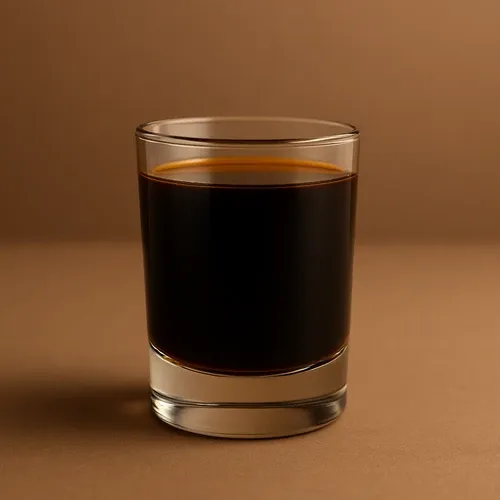
Caramel coloring is a neutral food colorant derived from heat-treated sugars, used in mixology primarily to adjust or standardize color. Its function is visual rather than structural, contributing negligible sweetness or aromatic impact when properly dosed.
Flavor & Technical
This section summarizes the sensory balance and technical behavior of Caramel Coloring when used in cocktails, combining perceived flavor intensity with functional roles.
Flavor balance and intensity
Technical characteristics
How Caramel Coloring works in cocktails
Caramel Coloring is analyzed here as a working cocktail ingredient: how it changes flavor, what role it plays in a build, when it should be substituted, and which recipe patterns it supports.
Flavor role in cocktail balance
Caramel coloring is effectively flavor-neutral in cocktail applications. At functional concentrations, it contributes no perceptible sweetness, bitterness, or aroma, serving exclusively as a visual modifier rather than a flavoring agent.
Best uses behind the bar
Applied as a visual standardization tool to deepen or unify drink color. Caramel coloring functions as a cosmetic modifier, dosed in minimal quantities to adjust hue without affecting balance, aroma, or structural composition.
Substitutes in cocktail builds
Burnt sugar solutions or dark sugar syrups can provide color adjustment when flavor contribution is acceptable. These substitutes introduce sweetness and aromatic compounds, altering balance compared to neutral caramel coloring.
Production and style context
Caramel coloring developed from early sugar-heating techniques and became widely adopted in the food and beverage industry as a consistent, shelf-stable colorant. Industrial production requirements for uniform appearance drove its expanded use.
Mixology notes
Different production methods yield distinct classes of caramel coloring, some engineered to be virtually flavorless. In cocktails, minimal dosing suffices, as excessive use can introduce unwanted bitterness.
Cocktail using Caramel Coloring
The only cocktail in our collection that features Caramel Coloring as a key ingredient.