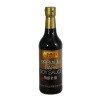
Dark Soy Sauce
Non-Alcoholic (~0% ABV) Miscellaneous
Dark soy sauce is a fermented soy-based condiment produced from soybeans, wheat, salt, and water, with extended aging and often added sugar or molasses. In mixology it is used sparingly to introduce umami depth, salinity, color, and subtle sweetness rather than as a primary flavor.
Flavor & Technical
This section summarizes the sensory balance and technical behavior of Dark Soy Sauce when used in cocktails, combining perceived flavor intensity with functional roles.
Flavor balance and intensity
Technical characteristics
How Dark Soy Sauce works in cocktails
Dark Soy Sauce is analyzed here as a working cocktail ingredient: how it changes flavor, what role it plays in a build, when it should be substituted, and which recipe patterns it supports.
Flavor role in cocktail balance
Dark soy sauce delivers intense umami with pronounced salinity, mild sweetness, and deep savory notes derived from fermentation. Compared to light soy sauce , it is less sharp but richer, with lower perceived acidity and a heavier, more rounded profile. When used in very small amounts, it enhances depth and savoriness without overt soy character.
Best uses behind the bar
Used as a micro-dose umami and salinity modifier in experimental and savory-leaning cocktails. It contributes depth, color, and savory complexity, often functioning as a background enhancer rather than a dominant taste. Its intensity requires careful dosing, typically by drops or barspoon fractions.
Substitutes in cocktail builds
Light soy sauce can substitute when salinity and umami are desired with less sweetness and color. Tamari offers a similar umami profile with a cleaner soy character and is suitable where wheat is avoided. Miso or umami tinctures can replace the savory function but differ in texture and salt delivery.
Production and style context
Soy sauce originated in China as a fermented seasoning derived from earlier soybean pastes. Dark styles developed through longer aging and the addition of sweetening agents, resulting in a thicker texture and deeper color. These styles became widely used across East and Southeast Asia as cooking and seasoning condiments.
Mixology notes
Dark soy sauce is not simply aged longer than light soy sauce ; it is often blended or finished with sugar or caramelized components to deepen color and round flavor. Its viscosity and color make it effective for visual impact in savory preparations even when used in very small quantities.